
On the morning of June 30th, the Kigali Convention Centre became the heart of the global energy debate. Its vast glass dome shimmered in the Rwandan morning light, a beacon drawing policymakers, industrialists, financiers, academics, and some of the brightest young minds from across Africa and beyond.
The ATOMi team arrived early, led by Stefan Marxmeier, Kelly Irakoze Ntawigenga, François Hirwa, and Fanny Ange Uwera. Our advisors, Karen Oppenheimer and Ryan Pickering from the United States, joined us just outside the lobby, and together we checked in to receive our badges.
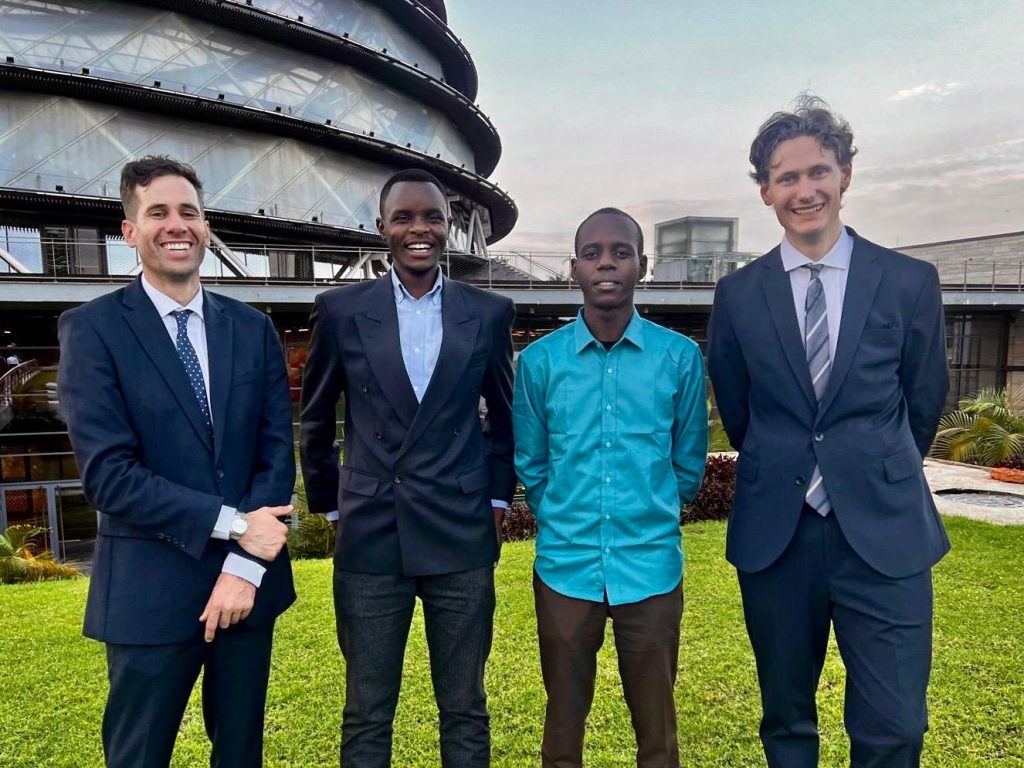
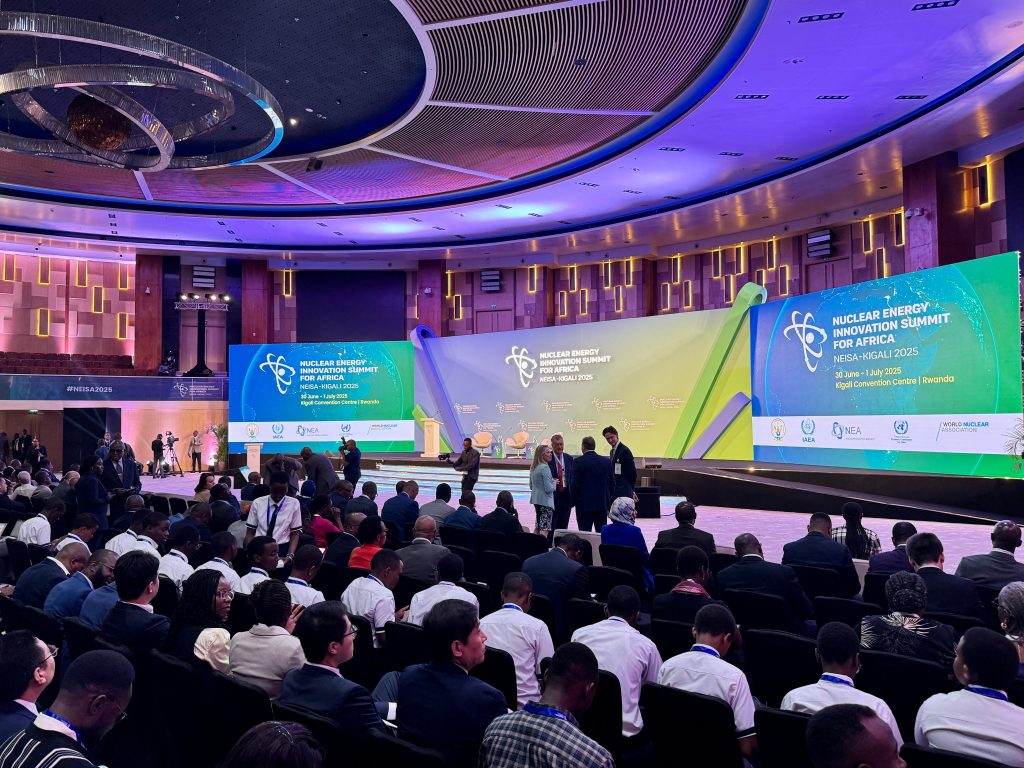
Inside, the atmosphere was electric. Blue and yellow banners stretched across the hallways, welcoming attendees to the Nuclear Energy Innovation Summit for Africa 2025. The air buzzed with breakfast conversations, warm greetings between colleagues, and the quick introductions of new faces. Dozens of members of the Rwanda Atomic Energy Board moved through the crowd, offering hospitality and guiding international guests. Outside, sleek cars pulled up in steady rhythm, dropping off dignitaries from across the continent.
As we entered the main hall, the scale and diversity of the audience came into sharp focus. Top high school students in crisp uniforms sat proudly with their teachers, filling rows of seats alongside university students who had traveled from across the continent. Near the front, ministers, ambassadors, and veteran energy professionals conferred quietly with their staff, adjusting notes and preparing remarks. The scene was striking: youthful optimism paired with decades of infrastructure and political expertise, all gathered in one room to discuss the fast-approaching convergence of Africa and nuclear energy.
When the lights dimmed, the hall tightened into hushed focus.
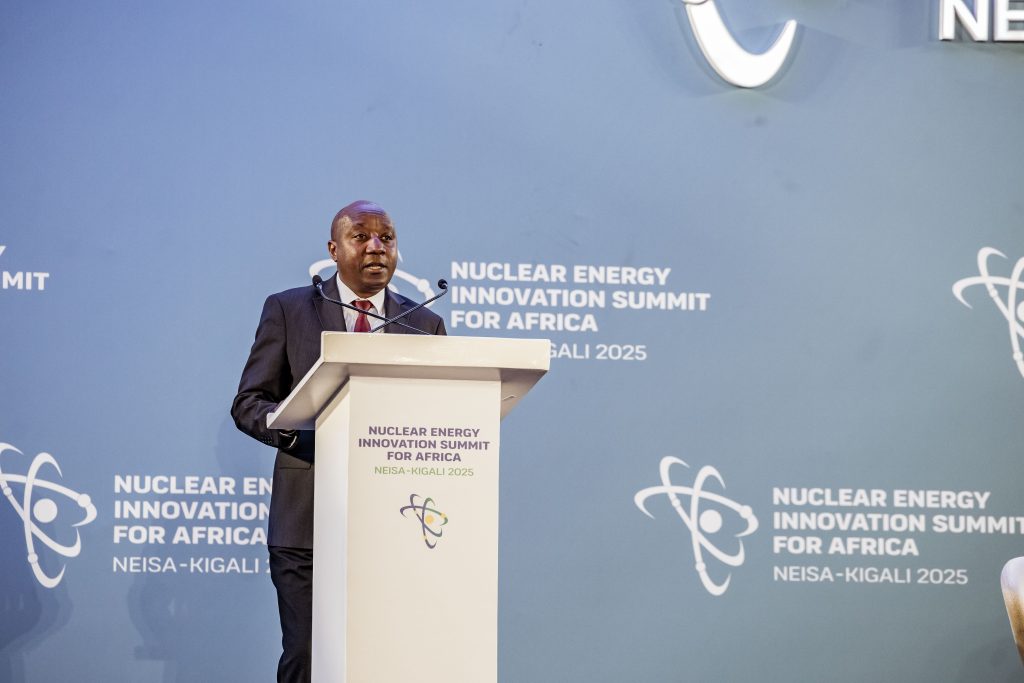
The first keynote speaker was Rwanda’s Former Prime Minister, Dr. Édouard Ngirente. Standing tall at the podium, he outlined Africa’s energy challenge in clear, measured terms: the scale of energy poverty, the pressing need for industrial growth, and the urgency of building sovereignty and resilience into the continent’s development plans.
He then linked these threads to nuclear energy with a renewed commitment:
“We should agree that investing in clean, reliable energy sources like nuclear is not just smart policy, it’s a necessary step toward sustainable development. The use of nuclear energy will not only address the energy deficit, but also will potentially provide innovative solutions to advance other sectors such as agriculture and healthcare, among others.”
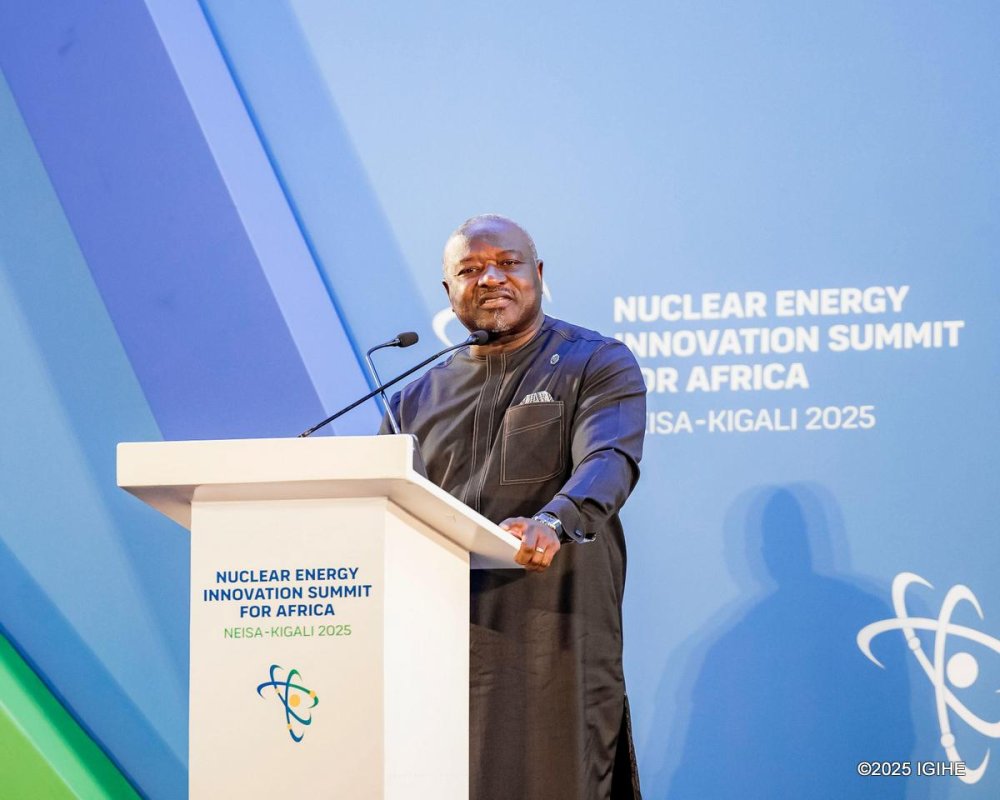
Then came Dr. Lassina Zerbo, Chairman of the Rwanda Atomic Energy Board.
“Africa is not merely adapting to the global transition,” Zerbo declared, “but it is driving it with resilience, innovation, and collaboration.”
With warmth and humility, he acknowledged the leadership that had brought him to Rwanda in the first place:
“I cannot go on with this remark without acknowledging the leadership and vision of His Excellency President Paul Kagame. He is the one who brought me to chair the Rwanda Atomic Energy Board. I am from Burkina Faso, and one would wonder why bringing somebody from Burkina to chair the Rwanda Atomic Energy Board. But Pan-Africanism and the vision that President Kagame is sharing shows us all that you don’t have to be Rwandan, you just have to be African.”
In that moment, the purpose of NEISA 2025 crystallized: Africa’s nuclear future would be built by Africans, for Africans, rooted in sovereignty and shared ambition.
Day 1: Vision, Technology, and Political Will
The Ministerial Panel that followed underscored just how seriously governments are taking this issue. Tanzania’s Deputy Prime Minister, Hon. Dr. Dotto Mashaka Biteko, joined ministers from Rwanda, Kenya, Mali, and Togo to discuss how nuclear could meet Africa’s “dual challenge”: powering the 600 million people who still lack electricity while also fueling the industries that can drive prosperity.
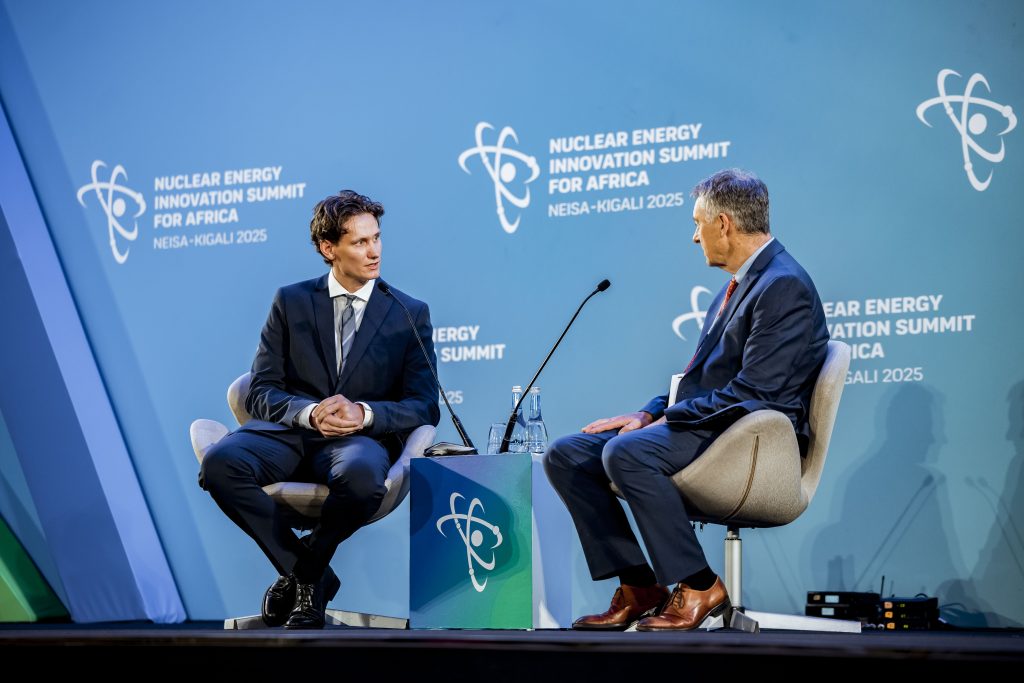
By midday, the focus shifted from politics to technology. A fireside chat brought together Professor Ian Farnan of Cambridge University and Stefan Marxmeier, founder of ATOMi.
For the team at ATOMi, this was a defining moment. In front of ministers, scientists, and students, Stefan’s words revealed why ATOMi exists:
“Nuclear can not just be about technology. We need discussion with policymakers, with regulatory bodies, for this technology to succeed.”
This flowed into the Experts Panel, where leaders from the IAEA, Ghana, Tanzania, and Rwanda discussed opportunities and challenges of nuclear adoption. Fuel management, workforce training, and energy policies were debated openly.
By the close of Day 1, three themes were emerging
- Nuclear energy in Africa can be woven into national industrial strategies.
- To deploy economically, nuclear supply chains must be crafted and localized.
- New ways of thinking are emerging when it comes to regulatory collaboration.
Day 2: Time to Build
If Day 1 was about vision and momentum, Day 2 was about practicality. We began again with coffee in the exhibition hall, but the tone was different. Conversations that had started the day before were now about logistics, partnerships, and commitments. The mood had shifted from “what if” to “how soon.”
The first session addressed infrastructure readiness, an often-overlooked but vital piece of nuclear deployment. Armand Zingiro, CEO of Rwanda Energy Group, spoke candidly about Rwanda’s ambitions and hurdles, while colleagues from the Central and Southern Africa Power Pools emphasized the need for regional integration.
Next came a high-level dialogue on leadership and innovation. Rwanda’s Minister of ICT, Hon. Paula Ingabire, emphasized Africa’s opportunity to leapfrog outdated models. Togo’s Hon. Cina Lawson highlighted how digital transformation already underway in West Africa could dovetail with nuclear adoption. Then, heavyweight voices Rafael Grossi of the IAEA and Dr. Zerbo of RAEB reinforced the point: Africa is not a passive participant in the global energy transition, but a driver of it.
By midday, attention turned to regulation. Panelists from Ghana, Kenya, the IAEA, and Pillsbury Law debated how to modernize frameworks to keep pace with innovation. Creative solutions emerged digital licensing tools, regional harmonization, and shared training centers for regulators.
After lunch, the summit shifted to people.
The Spotlight on Women in Nuclear was one of the most powerful sessions of the two days. Scientists, regulators, and entrepreneurs shared stories of leadership and resilience. Then Chira Zerbo, of Cambridge AtomWorks, delivered remarks that silenced the hall:
“Millions of African women and girls don’t get to view energy from that lens, because to them reliable energy is survival. It means not having to give birth in complete darkness during the night. It means not having to walk miles to fetch firewood for cooking. It means not developing respiratory illness from smoke. It means simply getting an education.”
She paused, then added:
“If we want nuclear energy to be a viable solution to Africa’s energy future, then women must be at the foundation.”
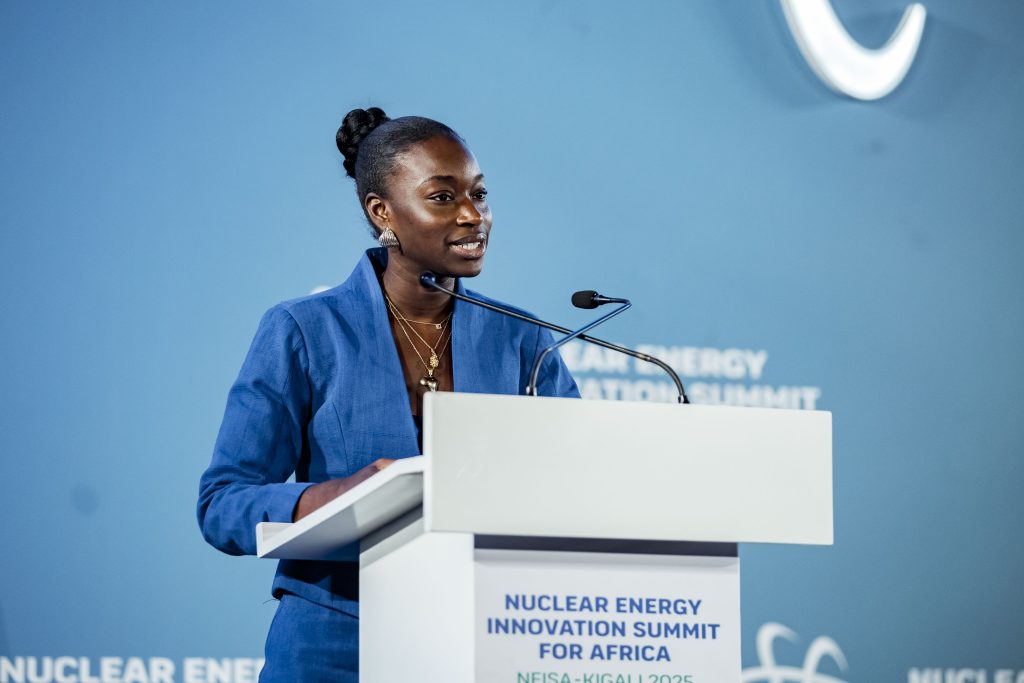
It was a defining moment where the technical, political, and human dimensions of nuclear energy all converged.
That theme carried into the Youth Empowerment and Capacity Development session. Students and young professionals filled the seats, and the atmosphere was electric. Prof. Ignace Gatare of the University of Rwanda reminded everyone that nuclear is not just about reactors, but about cultivating scientists, engineers, and policymakers who can steward them. Moderated by ATOMi advisor Ryan Pickering, the panel sparked ideas about youth-led innovation labs, cross-border mentorship networks, and education pipelines designed specifically for nuclear careers
Closing Words and Looking Ahead
As the summit drew to a close, Rwanda’s Minister of Infrastructure, Dr. Jimmy Gasore, captured the spirit of the event:
“This summit wasn’t just about technology — it was about reimagining Africa’s future through energy equity, innovation, and resilience. Small Modular Reactors and Micro Modular Reactors offer scalable, safe, and adaptable solutions to power Africa’s growth.”
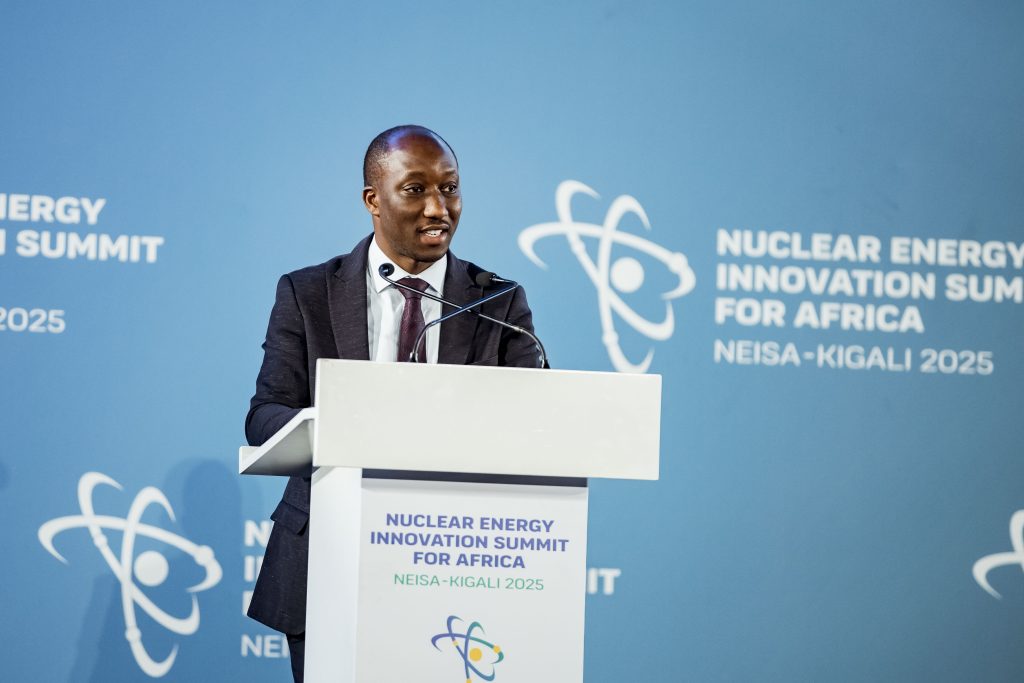
Then came the announcement many had been hoping for: there will be a NEISA 2026 and the location will be announced later this year!
Speaking for the team here at ATOMi, we hope it will be in Kigali once again. The leadership, the organization, the youthful energy, and above all, the vision of the Rwandan people made it clear: this is a country ready to lead Africa’s nuclear future.
As we walked out of the Kigali Convention Centre into the evening light, the sun setting behind the hills, there was a feeling that something had shifted. Someday, we hope NEISA 2025 will be remembered as a historic moment leading to policies, partnerships, and projects across the continent.
ATOMi is proud to have been part of it and prouder still to help turn these words into megawatts.
2 Responses
Love seeing students and ministers side by side. That’s how real change begins.
There is an intimacy in the cadence of your sentences. Rhythm, pause, and phrasing create trust, inviting reflective thought and sustained engagement.